|
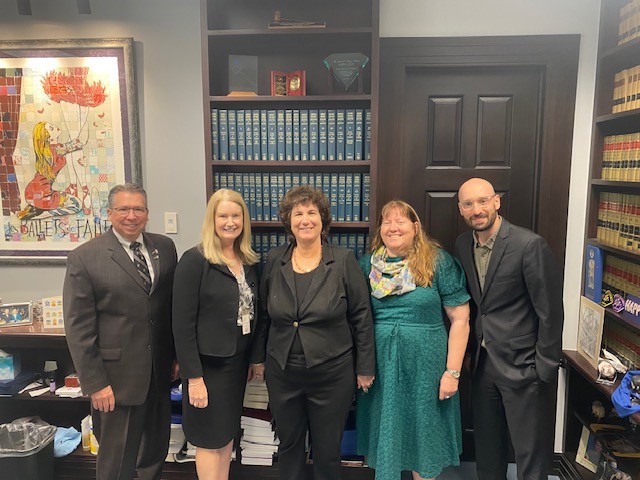
The following is a partial summary from the winning essay. Read more here.
Before law school, I was trained to understand evidence as something that existed in merely binary terms. You either have it or you don’t. In science and research, you don’t publish until your data meets statistical certainty. In the military, you don’t act until your intelligence is verified. Certainty has always required complete information. Anything less simply felt reckless.
That framework governed how I evaluated everything. When I failed, I believed it was because I didn’t have enough evidence or information. This was the framework I applied to the worst decision of my life, the night I heard a sound at West Point and did nothing more than report it. For five years, I measured this failure by what I couldn’t have known, what I couldn’t have proven, and what certainty I failed to achieve. But I never questioned whether certainty was the right measure at all.
Around two a.m. on a Sunday in October, five years before law school, I was a Cadet in Charge of Quarters. This was a job that placed the barracks under my responsibility, requiring me to know who was in, who was out, what belonged and what didn’t. Over time, I became deeply familiar with the sounds of the barracks, from the closing doors and footsteps on different floors to how sound traveled in stairwells versus hallways. That night, I heard something very off. A single crack. Sharp, decisive and unmistakably wrong. It wasn’t a slammed door. It wasn’t anything dropped. It was something I had heard before, just not in the barracks.
I reported it, providing the direction, timestamp and a description of the sound. The Military Police arrived within minutes, and it was the same unit that had been searching for a missing cadet and rifle for the past two days. They quickly searched the barracks, checked the parking lot, stairwells and hallways. But just as quickly as they came, they returned to say it was weights dropped in the gym. The explanation was impossible. The gym was locked, and the sound had come from the opposite direction. Yet they were the authority, and their conclusion offered my mind the permission it needed to stop wondering. So, I accepted it, filing the night as resolved, and went back to my post. I chose the institutional explanation over the facts I observed because I didn’t have enough certainty to prove them otherwise.
Two days later, they found him. In the same direction I had reported hearing the sound. The investigation confirmed he had died shortly after the timestamp on my report. The “weights” explanation was blatantly wrong. But choosing to believe it two nights prior was more comfortable than facing the truth.
See the full story to read the conclusion and learn more about the competition.
| 






.gif)