SHARE:  

View as Webpage


THE UNIVERSITY OF ARIZONA JAMES E. ROGERS COLLEGE OF LAW       |        September 23, 2026


Oct. 8

Property Rights at the Supreme Court

Oct. 22–24

Homecoming Weekend

Oct. 24

Red & Blue BBQ


Greetings,


This week we feature Professor Justin Pidot’s new scholarship on “abundance,” the policy theory arguing that government processes have gotten in the way of projects like transportation and affordable housing.


Professor Pidot’s expertise on government processes is not only theoretical. He has served in various posts within the federal government, including at the White House. His nuanced analysis of a political hot topic goes beyond buzzwords, drawing from both his experience at the highest levels of government and thoughtful legal scholarship.


Read on,

Jason


FEATURE


Prof. Justin Pidot on Abundance: Simplify Process, But Don’t Eschew It

Justin Pidot, Arizona Law professor and co-director of the Environmental Law Program, has had a front-row seat to the inner-workings of the federal government. He was deputy solicitor for land resources at the Department of the Interior during the Obama administration, and later general counsel for the White House Council on Environmental Quality during the Biden administration. He’s also served as an appellate lawyer for the Department of Justice focused on environmental issues.


His latest scholarship, which has been selected for publication in the Stanford Environmental Law Review, adds to the national debate about abundance, a political movement that has taken hold in liberal-leaning circles. In this Q&A with the University of Arizona, Professor Pidot, who also holds the Ashby Lohse Chair in Water and Natural Resources, explains what abundance is, the basics and value of public participation and why he argues in his new article to simplify the process to make government more effective, not eschew it entirely. Excerpts are below:


What is the abundance movement and why are policy wonks writing books about it?


Abundance is a political movement or idea that has arisen among some in the Democratic Party that a core problem facing this country is that we don’t build enough and deliver enough of the things that people need to live flourishing lives. The notion behind abundance is we should restructure the rules, the regulations and the laws of government to deliver more of those things – to deliver an abundance of those things, if you will.


Can you explain your central argument in this article?


The conclusion I draw is let’s not get rid of all of the process. Instead, let’s think hard about the rules that we have.


Since you’ve seen public participation up close, can you explain how it works in practice?


At a very general level, public participation is any way for the public – people, businesses and the like – to communicate their views to the government about something the government is doing. The way this usually happens, especially with the federal government, is through what we call a public notice of a proposed decision and then a comment process.


What is the core piece of reform that you advocate for in your article to improve the public participation process?


The notion in the article is not that the government should never respond to comments, but that its obligation to do so – and the ability for courts to then police whether it has done so – has turned the process into one that is very time consuming and very driven by litigation. So, if I don’t like a project, I can send in lots and lots of comments in hopes that I can lay a trap and exploit that in litigation if the government doesn’t respond.


So, the proposal is, let’s say to the government, “You don’t have to respond – you could, it’s your choice, but you don’t have to.” And that makes it so that it doesn’t become a way for opponents to try to game the system on the front end, and it doesn’t become sort of this trap for the government on the back end.


Why should the average American care about these frankly convoluted approaches to government process?


Two things: Do you care about how much you’re paying for electricity? Do you care about climate change severely crippling the future for your children? If you care about both of those things, then you have to care about both the government’s ability to act and its ability to act wisely. And that’s really what I’m talking about.

FROM AROUND THE COLLEGE


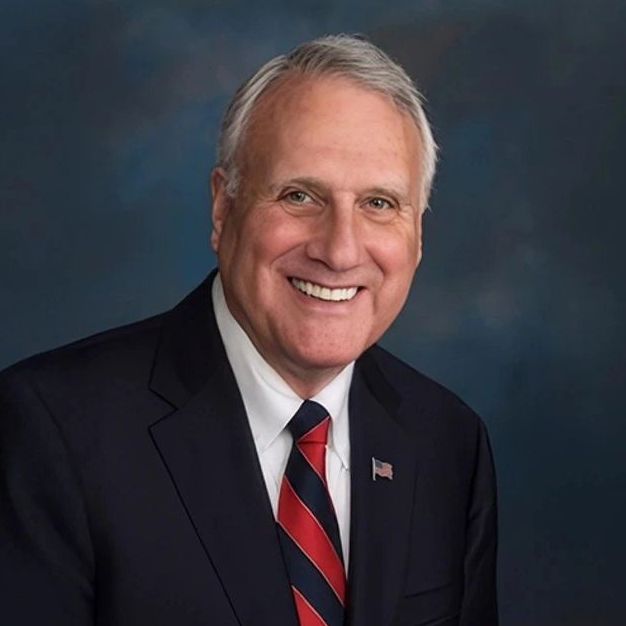
Arizona Law Remembers Sen. Jon Kyl (’66)

We were saddened to learn of the passing of former U.S. Senator Jon Kyl (’66), who died last week at 84. A Double Wildcat, Kyl was elected to the U.S. House of Representatives in 1987 and served four terms before serving in the Senate from 1995 to 2013. He returned briefly in 2018 to fill the vacancy left by Sen. John McCain’s death. His staffers included Arizona Law students and at least one alum.


Kyl maintained other ties to the university as well. The University Libraries Special Collections holds his congressional papers, which document his decades of public service through speeches, committee files, hearings, reports, press releases, photographs and correspondence. Earlier this year, the University of Arizona announced the establishment of the Kyl Institute for National Security, designed to facilitate strategic partnerships with government, industry and academia to deliver mission-focused research in national security and defense.


“The University of Arizona mourns the loss of Sen. Jon Kyl, and our thoughts are with his family during this difficult time,” said U of A President Suresh Garimella. “Sen. Kyl dedicated decades of his life to public service, and his record on national security and water policy left Arizona and the nation better than he found them. It is especially meaningful to us that his legacy continues at this university through the Kyl Institute for National Security, where his commitment to responsible governance lives on in the work of our students and researchers.”

Registration Open for Homecoming BBQ

We are looking forward to gathering with the LawCat community Homecoming Weekend, October 22–24.


Registration is now open for the perennial favorite Red & Blue BBQ Saturday, October 24 at the College of Law.


Enjoy great food, Wildcat spirit and a fun, family-friendly atmosphere. Tickets are $20 per person and include food and non-alcoholic beverages, one alcoholic drink ticket for guests 21+, and an Arizona Law Homecoming T-shirt. Children under 5 attend free.


The BBQ time will be announced once the Arizona football kickoff time is confirmed. We hope to see you there!

Phoenix Attorneys in Private Practice: Connect with Us!

Calling Phoenix-based attorneys in active private practice: We are looking for volunteers.


A group of student organizations are planning a student-led networking activity. They are seeking private practice attorneys to engage with, particularly those with experience in firm hiring processes. If you are willing to assist, please email Chris Gast, Senior Director of Student Resources at the College of Law.


Thank you in advance!


IN THE NEWS


Order on Mex­ican wolf faces hurdles

Great Falls Tribune, featuring Justin Pidot


When AI Listens, Are Patients Entitled To The Recording?

Law360, quoting Tara Sklar

Do You Have News?

Your success is the college’s success, and we want to celebrate with you! If you have landed a new job, received an award or recognition, stepped into a leadership role or have good news in general, let us know.

Instagram, @uaiplp


The College of Law is a tight-knit community. The loss of any member is a loss to us all. We join with the Arizona Law community and the entire University of Arizona to gratefully recognize Jon Kyl’s public service.


Onward,

Jason


Facebook  Instagram  X  LinkedIn